
News

Blog

This is some blog description about this site

New Update for International Students: Co-op Work Permit No Longer Required for Post-Secondary Programs Starting April 1, 2026

Canada has announced a significant policy change that will benefit many international students. Beginning April 1, 2026, post-secondary students who must complete a work placement as part of their program no longer need to apply for a separate co-op work permit. This adjustment is intended to reduce paperwork, shorten processing times, and make it easier for students to complete the practical training required for graduation.

This update applies only to students in colleges, universities, and other post-secondary institutions. Secondary school students still need a co-op work permit. 

Below is a clear explanation of what this change means and how it affects your studies.

What Counts as a Student Work Placement 

A student work placement is a work experience that your school requires you to complete in order to graduate. These placements are approved by your designated learning institution and can include:

  • Co-op terms 
  • Internships
  • Practicums
  • Mentorship or training programs

Who Can Participate Without a Co-op Work Permit

You may take part in a required placement without applying for a co‑op work permit if all of the following conditions are met:

  • Your study permit includes conditions that allow you to work on campus
  • Your school confirms in writing that the placement is required for your program
  • You have a valid study permit or you applied to extend it before it expired
  • You are studying full time at a designated learning institution
  • Your program is at least six months long and leads to a degree, diploma, or certificate 
  • The placement makes up half or less of your total program length

Secondary School Students

This update does not apply to secondary school students. If you are in high school and your program includes a required work placement, you must still apply for a co-op work permit.

Who Is Not Eligible

You may not qualify for a student work placement if:

  • Your study permit does not include work conditions
  • Your program does not require work placement
  • Your placement is more than half of your total program

If you are eligible but your study permit is missing work conditions, you may need to request an amendment. 

If You Already Applied for a Co-op Work Permit

If you submitted a co-op work permit application before April 1, 2026, but you no longer need it:

  • You may withdraw your application
  • IRCC may also withdraw it for you and send a letter confirming that the permit is no longer required.

Where You Are Allowed to Work

You may work with any employer that your school approves for the placement. This can include off-campus employers.

If your placement involves working in a hospital or another environment where public health protection is important, you may need a medical exam unless you already completed one. 

Hours You Can Work During a Placement

There is no weekly limit on the number of hours you can work in a required placement. However, the placement cannot exceed half of your total program length.
 

Continue reading
  45 Hits
  0 Comments
45 Hits
0 Comments

Canada Implements New Asylum & Immigration Measures Under Bill C-12

Canada has introduced significant updates to its immigration and asylum framework. As of March 26, 2026, Bill C‑12—the Strengthening Canada’s Immigration System and Borders Act—has officially become law. These changes affect how asylum claims are assessed, how information is shared across government departments, and how immigration documents are managed.

Below is a clear breakdown of what newcomers, refugee claimants, and temporary residents need to know.

New Eligibility Rules for Asylum Claims

Starting June 3, 2025, two new conditions will determine whether an asylum claim can be referred to the Immigration and Refugee Board of Canada (IRB).

You may be found ineligible if:

  • You file an asylum claim more than one year after your first entry into Canada (for anyone who entered after June 24, 2020), even if you left and re‑entered later.
  • You entered Canada irregularly between ports of entry along the Canada–US border and submit your claim after 14 days.

Important Exceptions & Protections

  • Unaccompanied minors will receive special consideration due to their vulnerability.
  • Individuals who are not eligible for IRB referral may still apply for a Pre‑Removal Risk Assessment (PRRA) to ensure they are not returned to danger.
  • The Safe Third Country Agreement remains unchanged.

New Rules for Domestic Information Sharing

Bill C‑12 gives IRCC clearer authority to share certain personal information within the department and with federal, provincial, and territorial partners.

What IRCC Can Now Share

  • Identity and status information
  • IRCC‑issued documents
  • Information needed to process applications across programs (e.g., using PR data for citizenship processing)

How We Can Support You

At CIECSI, our team is here to help you:

  • Understand how Bill C‑12 may impact your situation
  • Assess your eligibility for an asylum claim or PRRA
  • Navigate the updated application and documentation requirements
  • Explore alternative immigration pathways if you are no longer eligible under the new rules
Continue reading
  66 Hits
  0 Comments
66 Hits
0 Comments

Changes to how the parents and grandparents super visa income requirement is calculated

Ottawa, March 20, 2026—Canada is taking back control of our immigration system and returning overall immigration to sustainable levels. At the same time, we know families are strongest when they’re together, and we remain committed to family reunification.

Starting March 31, 2026, Immigration, Refugees and Citizenship Canada (IRCC) will change how it calculates family income for super visa eligibility, making the program more equitable and accessible to more families while ensuring parents and grandparents are financially supported during their stay in Canada.

The super visa is a multiple-entry visitor visa that allows parents and grandparents of Canadian citizens and permanent residents to visit their family in Canada for longer periods. An applicant’s host, that is, their child or grandchild in Canada, must provide proof that they meet the income requirements to support their family members while they’re here.

The new approach will provide hosts with two alternative ways to meet the income requirement:

  • Extending the income assessment period: Hosts and their co-signer (if applicable) may meet or exceed the income requirement in either one of the two taxation years preceding the time of application. Previously, IRCC assessed only the year before.
  • Allowing the income of the visiting parent or grandparent to be added: If the hosts and their co-signer (if applicable) meet the required minimum percentage of income, the income of the visiting parents and grandparents can be added to cover the remaining amount.

As of March 31, 2026, all applications already in processing, or submitted on or after that date, will be assessed against the new income requirements. Under these updated criteria, families who were previously eligible will continue to qualify. Those who wish to benefit from one of the alternative means must submit the necessary documents proving they meet the income requirement for their family size.


https://www.canada.ca/en/immigration-refugees-citizenship/news/notices/changes-parents-grandparents-super-visa-income-requirement-calculated.html

Continue reading
  52 Hits
  0 Comments
52 Hits
0 Comments

New IRCC Update: What Iranian Workers in Canada Need to Know for 2026-2027

Canada has introduced an important update regarding Iranian nationals living in the country. As of March 1, 2026, Immigration, Refugees and Citizenship Canada (IRCC) has extended temporary measures until March 31, 2027, but only for Iranian nationals who currently hold a valid Canadian work permit. 

Who is Eligible to Extend Their Work Permit?

To qualify under the March 1, 2026 special measures, applicants must meet all of the following conditions:

  • Be an Iranian national with a valid passport.
  • Be inside Canada with a valid work permit both at the time of application and when IRCC makes a decision.
  • Have received their current work permit on or before February 28, 2025.
  • Not have already received a work permit extension under the 2026 special measures (only one extension is allowed).
  • Meet the IRCC's general eligibility and admissibility requirements, inlcuding:
    • No criminal history
    • No security concerns
    • Not working for an ineligible employer
    • Proof of financial ability to support yourself and accompanying family members 
    • Proof you will leave Canada at the end of your authorized stay

How We Can Support You

At CIECSI, we understand how important it is to maintain your legal status—especially during uncertain times. Our team can help you:

  • Confirm your eligibility under the 2026 special measures
  • Prepare and submit your work permit extension
  • Explore long-term pathways 
  • Understand your next steps if you are a visitor or student
Continue reading
  127 Hits
  0 Comments
127 Hits
0 Comments

Canada is allowing certain apprentices to study without a study permit

This exemption is only for those who are currently in Canada as temporary foreign workers

Eligibility

  1. You have a valid work permit.
  2. You have a job in an eligible construction occupation.
  3. You have an apprenticeship agreement registered with the relevant provincial or territorial apprenticeship and certification authority.

Eligible occupations

Eligible occupations in TEER 0

NOC 70010 – Construction managers

NOC 70011 – Home building and renovation managers

Eligible occupations in TEER 1

NOC 21300 – Civil engineers

Eligible occupations in TEER 2

NOC 22300 – Civil engineering technologists and technicians

NOC 22303 – Construction estimators

NOC 72102 – Sheet metal workers

NOC 72106 – Welders and related machine operators

NOC 72200 – Electricians (except industrial and power system)

NOC 72201 – Industrial electricians

NOC 72300 – Plumbers

NOC 72310 – Carpenters

NOC 72311 – Cabinetmakers

NOC 72320 – Bricklayers

NOC 72400 – Construction millwrights and industrial mechanics

NOC 72401 – Heavy-duty equipment mechanics

NOC 72402 – Heating, refrigeration and air conditioning mechanics

NOC 72422 – Electrical mechanics

NOC 72501 – Water well drillers

Eligible occupations in TEER 3

NOC 73100 – Concrete finishers

NOC 73110 – Roofers and shinglers

NOC 73112 – Painters and decorators (except interior decorators)

NOC 73113 – Floor covering installers

Continue reading
  569 Hits
  0 Comments
569 Hits
0 Comments

Express Entry: Category Based Selection

  • Express Entry: Category Based Selection

    ___________________________________________________________________


    1.French-language proficiency


    • To be eligible, you must:
    • Have French-language test results that show a minimum score of 7 in all 4 language abilities on the Niveaux de competence linguistique Canadians.
    • Meet all of the requirements in the instructions for that round.

    1. Healthcare and Social Services Occupations


    • To be eligible, you must:
      • Have accumulated, within the past 3 years, at least 6 months of full-time continuous work experience (or an equal amount of part-time experience)
        • In a single occupation listed in the tale below
        • In Canada or abroad
      • Meet all the requirements in the instruction for that round

    Occupation

    2021

    NOC Code

    2021 TEER

    Category

    Animal health technologists and Veterinary technicians

    32104

    2

    Audiologists and speech language pathologists

    31112

    1

    Cardiology technologists and electrophysiological diagnostics technologists

    32123

    2

    Chiropractors

    31201

    1

    Dental Hygienists and dental therapists

    32111

    2

    Dentists

    31110

    1

    Dieticians and nutritionists

    31121

    1

    General practitioners and family physicians

    31102

    1

    Licensed Practical nurses

    32101

    2

    Massage therapists

    32201

    2

    Medical laboratory assistants and related technical occupations

    33101

    3

    Medical Laboratory technologists

    32120

    2

    Medical Radiation technologists

    32121

    2

    Medical sonographers

    32122

    2

    Nurse aides, orderlies and patient service associates

    33102

    3

    Nurse practitioners

    31302

    1

    Nursing coordinators and supervisors

    31300

    1

    Occupational therapists

    31203

    1

    Optometrists

    31111

    1

    Other medical technologists and technicians

    32129

    2

    Other professional occupations in health diagnosing and treating

    31209

    1

    Other technical occupations in therapy and assessment

    32109

    2

    Paramedical occupations

    32102

    2

    Pharmacists

    31120

    1

    Pharmacy technical assistants and pharmacy assistants

    33103

    3

    Pharmacy technicians

    32124

    2

    Physician assistants, midwives and allied health professionals

    31303

    1

    Physiotherapists

    31202

    1

    Psychologists

    31200

    1

    Registered nurses and registered psychiatric nurses

    31301

    1

    Respiratory therapists, clinical perfusionists and cardiopulmonary technologists

    31203

    2

    Social and community service workers

    42201

    2

    Social workers

    41300

    1

    Specialists in clinical and laboratory medicine

    31100

    1

    Specialists in Surgery

    31101

    1

    Therapists in counselling and related specialized therapies

    41301

    1

    Veterinarians

    31103

    1


    1. Science, Technology, Engineering and Math (STEM) Occupations
    • To be eligible, you must:
    • Have accumulated within the past 3 years at least 6 months of full-time continues work experience (or an equal amount of part-time experience).
      • In a single occupation listed in the table below
      • In Canada or abroad
    • Meet all the requirements in the instructions for that round.

    Occupation

    2021

    NOC Code

    2021 TEER

    Category

    Architecture and science managers

    20011

    0

    Civil engineering technologists and technicians

    22300

    2

    Civil Engineers

    21300

    1

    Cybersecurity specialists

    21220

    1

    Electrical and electronics engineering technologists and technicians

    22310

    2

    Electrical and electronics engineers

    21310

    1

    Geological Engineers

    21331

    1

    Industrial and manufacturing Engineers

    21321

    1

    Insurance agents and brokers

    63100

    3

    Mechanical Engineering Technologists and Technicians

    22301

    2

    Mechanical Engineers

    21301

    1

    1. Trade Occupations


    • To be eligible, you must:
    • Have accumulated within the past 3 years at least 6 months of full-time continues work experience (or an equal amount of part-time experience).
      • In a single occupation listed in the table below
      • In Canada or abroad
    • Meet all the requirements in the instructions for that round.

    Occupation

    2021

    NOC Code

    2021 TEER

    Category

    Contractors and supervisors, oil and gas drilling and services

    82021

    2

    Floor covering installers

    73113

    3

    Painters and decorators (Except interior decorators)

    73112

    3

    Roofers and shingler’s

    73110

    3

    Concrete finishers

    73100

    3

    Other technical trades and related occupations

    72999

    2

    Water well drillers

    72501

    2

    Electrical mechanics

    72422

    2

    Heating, refrigeration and air conditioning mechanics

    72402

    2

    Heavy-duty equipment mechanics

    72401

    2

    Construction millwrights and industrial mechanics

    72400

    2

    Bricklayers

    72320

    2

    Cabinetmakers

    72311

    2

    Carpenters

    72310

    2

    Gas fitters

    72302

    2

    Plumbers

    72300

    2

    Industrial electricians

    72201

    2

    Electricians (except industrial and power system)

    72200

    2

    Welders and related  machine operators

    72106

    2

    Sheet metal workers

    72102

    2

    Machinists and machining and tooling inspectors

    72100

    2

    Home building and renovation managers

    70011

    0

    Construction Managers

    70010

    0

    Cooks

    63200

    3

    Construction estimators

    22303

    2

    1. Agriculture and Agri-Food Occupations


    • To be eligible, you must:
    • Have accumulated within the past 3 years at least 6 months of full-time continues work experience (or an equal amount of part-time experience).
      • In a single occupation listed in the table below
      • In Canada or abroad
    • Meet all the requirements in the instructions for that round.


    Occupation

    2021

    NOC Code

    2021 TEER

    Category

    Butchers – retail and wholesale

    63201

    3

    1. Education Occupations


    • To be eligible, you must:
    • Have accumulated within the past 3 years at least 6 months of full-time continues work experience (or an equal amount of part-time experience).
      • In a single occupation listed in the table below
      • In Canada or abroad
    • Meet all the requirements in the instructions for that round.

    Occupation

    2021

    NOC Code

    2021 TEER

    Category

    Elementary and secondary school teacher assistants

    43100

    3

    Instructors of persons with disabilities

    42203

    2

    Early childhood educators and assistants

    42202

    2

    Elementary school and kindergarten teachers

    41221

    1

    Secondary school teachers

    41220

    1


Continue reading
  719 Hits
  0 Comments
719 Hits
0 Comments

Canada announces 2025 Express Entry category-based draws, plans for more in-Canada draws to reduce labour shortages From: Immigration, Refugees and Citizenship Canada

News release

February 27, 2025—Ottawa—Immigration is essential to supporting Canada’s economic growth. As labour requirements in key sectors continue to evolve, it’s important that Canada’s immigration system is nimble and responsive to our country’s needs.

Today, the Honourable Marc Miller, Minister of Immigration, Refugees and Citizenship announced the 2025 Express Entry categories, which include a new education category, to align the selection of federal economic immigrants with Canada’s long-term labour shortages.

For 2025, the focus of the federal economic class draws will be to invite candidates with experience working in Canada (Canadian Experience Class) to apply for permanent residence.

Additionally, to meet Francophone immigration targets and meet the acute needs in health, trades and education, IRCC will conduct category-based invitation rounds in the following categories:

  • strong French language skills, or
  • work experience in the following fields:
    • health care and social services, such as family physicians, nurse practitioners, dentists, pharmacists, psychologists and chiropractors
    • trades, such as carpenters, plumbers and contractors
    • education, such as teachers, child care educators and instructors of persons with disabilities

As Canada makes adjustments to achieve well-managed, sustainable growth and economic prosperity for the long term, IRCC continues to focus economic immigrant selection efforts on priority sectors, such as health care, construction and education. This allows us to issue invitations to apply to prospective permanent residents who have specific skills, training or language abilities in order to bring those in-demand professionals to Canada.

IRCC will also continue to support economic growth through Francophone immigration outside Quebec by prioritizing candidates with strong French language proficiency in Express Entry. This reaffirms the Government of Canada’s commitment to supporting

Continue reading
  933 Hits
  0 Comments
933 Hits
0 Comments

Permanent residence for Ukrainian nationals with family members in Canada

Permanent residence for Ukrainian nationals with family members in Canada

We’ve put a temporary public policy in place to help families affected by the Russian invasion of Ukraine reunite in Canada.

This policy lets certain Ukrainian foreign nationals in Canada and their family members apply for permanent residence.

  • Family members can live in or outside Canada
  • Permanent resident visas will be issued to family members living outside of Canada.

If you meet the eligibility criteria of the public policy, you can apply for permanent residence.

Once we receive your application, we’ll check that:

  • you submitted all required information
  • you meet the eligibility criteria

If we confirm you’re eligible, we’ll:

  • invite you and your family members to complete
    • medical exams, if required
    • criminal and security checks
    • biometrics, if required
  • tell you our decision once we’ve processed your application

Applicant categories

There are 2 categories of family members who are eligible to apply for permanent residence under this policy.

Category 1: A family member of a Canadian citizen or permanent resident in Canada

You can apply to immigrate under this policy if you meet the following conditions.

You must :

  • be a Ukrainian national
  • be a family member of a Canadian citizen or permanent resident including their:
    • spouse or common-law partner
    • child (regardless of age)
    • grandchild
    • parent
    • grandparent, or
    • sibling (or half-sibling)
  • be in Canada when:
    • you submit your application
    • you’re granted permanent residence
  • have valid temporary resident status in Canada, or have applied to restore your status if it has been expired for less than 90 days
  • hold a passport or travel document, or provide supporting identity documents if you don’t hold one
  • provide a signed statutory declaration form (IMM 0191) from your family member in Canada explaining your relationship to them, and
  • be admissible to Canada

The Canadian citizen or permanent resident (your family member) must:

  • currently live in Canada
  • be at least 18 years of age or older
  • not have been granted permanent residence themselves under this policy

Category 2 – Spouse or common-law partner of a Ukrainian national who has family in Canada

You can apply to immigrate under this policy if you meet the following conditions.

You must be the spouse or common-law partner of a Ukrainian national.

Your spouse or partner must:

  • be unable to leave Ukraine, be missing, have passed away, or have presumed to have passed way
  • be the family member of a Canadian citizen or permanent resident including their:
    • child (regardless of age)
    • grandchild
    • parent
    • grandparent, or
    • sibling (or half-sibling)

You must:

  • be in Canada when:
    • you submit your application
    • you’re granted permanent residence
  • not have remarried or be in a common-law relationship with another person since leaving Ukraine
  • have valid temporary resident status in Canada, or have applied to restore your status if it has been expired for less than 90 days
  • hold a passport or travel document, or provide supporting identity documents if you don’t hold one
  • provide a signed statutory declaration form (IMM 0191) from your spouse or partner’s family member in Canada explaining your relationship to them, and
  • be admissible to Canada

The Canadian citizen or permanent resident (your husband/common-law’s family member) must:

  • currently live in Canada
  • be at least 18 years of age or older
  • not have been granted permanent residence themselves under this policy

Who can’t apply

You’re not eligible to apply for permanent residence under this policy if you don’t meet the criteria of 1 of the 2 categories above including if:

  • you’re outside Canada
  • you’re inadmissible, other than for financial reasons
  • your relationship type is not listed above

Family members who can immigrate with you to Canada

You can include eligible family members in your application to immigrate with you to Canada if they meet all of the medical, criminal and security requirements to become permanent residents of Canada.

Eligible family members are:

  • your spouse or common-law partner
  • your dependent child who is:
    • under 22 years old and doesn’t have a spouse or partner or
    • 22 years old or over and  
      • has depended on you for financial support since before they were 22 AND
      • can’t support themselves financially because of a mental or physical condition
  • your grandchild (dependent child of your, or your spouse or partner’s dependent child)

Family members can be in or outside of Canada. Only you are required to be in Canada throughout the application process.

You must list these family members in your application, even if they’re not immigrating with you now. If you don’t, you will not be able to sponsor them later.

Continue reading
  908 Hits
  0 Comments
908 Hits
0 Comments

2023 Parents and Grandparents sponsorship program starts

IRCC has announced that 24, 200 invitation to apply for parent and grandparent sponsorship this year hoping to get 15,000 qualified applicants who meets the eligibiliy criteria to sponsor parents and grandparents. Please read the full announcement below. If you want to know that you qualify for the program, please contact us at www.ciecsi.org or call us at (403) 398-7203. 

Parents and Grandparents Program re-opens this fall

Ottawa, September 8, 2023—Family reunification is a pillar of Canada’s immigration system. Canada remains committed to helping Canadian citizens and permanent residents sponsor their loved ones to live and work alongside them in Canada. Our dedication to reuniting families through the Parents and Grandparents Program can be seen through our historically high admissions numbers for parents and grandparents under the Multi-Year Levels Plan.

Immigration, Refugees and Citizenship Canada (IRCC) will continue to reunite families by accepting up to 15,000 complete applications for sponsorship under the Parents and Grandparents Program this year. On October 10, 2023, IRCC will begin sending invitations to apply to 24,200 interested potential sponsors, aiming to receive up to 15,000 complete applications. Invitations will be sent over the course of 2 weeks.

Due to the number of forms remaining in the pool of submissions from 2020, IRCC will send invitations to apply to randomly selected potential sponsors from that pool instead of opening a new interest to sponsor form. This is the same approach taken for the 2021 and 2022 intakes. Anyone who submitted an interest to sponsor form in 2020, but did not receive an invitation to apply in 2021 or 2022, is encouraged to check the email account they provided in 2020 when they submitted their interest to sponsor form.

Those invited to apply as part of the 2023 intake will continue to use the Permanent Residence Portal or the Representative Permanent Residence Portal, which allow applications to be submitted electronically. This is part of our commitment to modernize Canada’s immigration system and to speed up and simplify the application process.

Those who wish to reunite with their parents and grandparents in Canada, but who are not invited this year, may consider having their parents or grandparents apply for a super visa, which is a multiple-entry visa that is valid for up to 10 years. Enhancements to the super visa allow super visa holders to stay in Canada for 5 years at a time, with the option to extend their visit by up to 2 years at a time without leaving the country. These changes make it easier for Canadian citizens and permanent residents to reunite with their parents and grandparents in Canada for longer periods.

For information on previous application intakes for the Parents and Grandparents Program, see the recently published intake report on our website, The Parents and Grandparents Program: Intake Report 2014 to 2019. A more recent intake report covering the 2020 to 2022 application intakes will be published by the end of the year.

Continue reading
  1103 Hits
  0 Comments
1103 Hits
0 Comments

Visitors can apply for a work permit from inside Canada

IRCC announced that people who are currenlty visiting Canada can apply for a work permit if they meet the folloiwng eligibility criteria

1. If you have valid visitor status

2. If you have a valid job offer supported by LMIA or an LMIA exempt offer of employment

3. If you can file employer specific application before February 28, 2025


If you meet the above three criteira or if you want to know more about this program, please contact usat 4033987203 or email us  

Continue reading
  918 Hits
  0 Comments
918 Hits
0 Comments

IRCC speeding up processing for spousal applications

September 24, 2020—Ottawa—Today, the Honourable Marco E. L. Mendicino, Minister of Immigration, Refugees and Citizenship, is announcing action to speed up spousal application processing and help families build their lives together in Canada.

Immigration, Refugees and Citizenship Canada (IRCC) has increased the number of decision makers on spousal applications in Canada by 66%, to process spousal applications more quickly and reduce couples’ wait times.

IRCC is leveraging new technology in a pilot to digitize paper applications so they can be processed more efficiently by IRCC employees working remotely and at various worksites. In addition to implementing facilitative biometrics measures, IRCC will be piloting, in the upcoming weeks, technology to conduct interviews with applicants remotely, in adherence with public health protocols.

With these initiatives, IRCC aims to accelerate, prioritize and finalize approximately 6,000 spousal applications each month from October until December 2020. Combined with processing to date, this rate will lead to about 49,000 decisions by the end of this year.

COVID-19 has created uncertainty for Canadians who are sponsoring spouses for permanent residence. We will continue to search for innovative and compassionate ways to reunite families, while following the advice of our public health experts to protect the health and safety of Canadians.

Source: Immigration, Refugees and Citizenship Canada

Continue reading
  2158 Hits
  0 Comments
2158 Hits
0 Comments

Increase in permanent residence fees effective April 30

Ottawa, April 30, 2020—In order to manage increasing program and service delivery costs, Immigration, Refugees and Citizenship Canada is increasing permanent residence fees for most economic immigration programs, except caregivers, as of April 30, 2020.

Permanent residence fees have not increased since 2002. As such, they do not reflect the rise in inflation over the last 18 years and the increasing cost of permanent residence operations and processing.

The increase on April 30 will affect applicants to most economic permanent residence immigration programs, except caregivers. The fees will then be automatically adjusted for inflation every 2 years for all permanent residence applications, including the economic, family and humanitarian programs, beginning in 2022.

The Government of Canada supports a cost-effective approach to financing government programs, where most of the costs are borne by those who receive the services and benefit directly from them.

The changes ensure that Canada remains competitive and in line with fees charged by other immigrant-receiving countries. In most cases, Canada’s fees are considerably less expensive than countries with similar migration systems, such as Australia, New Zealand, the United Kingdom and the United States.

For more information on the fee increases, please see the regulations, which came into force April 30, 2020.

source:source: https://www.canada.ca/en/immigration-refugees-citizenship/news/notices/increase-permanent-residence-fees-effective-april-30.html

Continue reading
  2456 Hits
  0 Comments
2456 Hits
0 Comments

Canada delays 2020 parents and grandparents immigration program

Canada is delaying the opening of its 2020 Parents and Grandparents Program due to its ongoing efforts to contain the spread of the coronavirus pandemic.

The launch of the call for expressions of interest to apply for the popular program was anticipated in the coming weeks, according to an Immigration Refugee and Citizenship Canada (IRCC) media release.

The temporary deferral of the call for applications is not expected to impact when parents and grandparents will arrive in Canada, and IRCC will still process these applications.

The Parents and Grandparents Program enables Canadian citizens and permanent residents to sponsor their parents and grandparents to obtain permanent resident status.

The program is so popular that the federal government has sought various ways over the past decade to manage its intake since 2011. 

Source:  https://www.cicnews.com/2020/03/canada-delays-2020-parents-and-grandparents-immigration-program-0314005.html#gs.1po4ej

Continue reading
  2205 Hits
  0 Comments
2205 Hits
0 Comments

New pilot for family members previously excluded from Canada will ‘right that wrong,’ immigration minister says

Sponsorship applications for some family members who were previously banned from obtaining permanent residence under Canada’s Immigration and Refugee Protection Regulations will be allowed under a new two-year pilot, Canada’s Minister of Immigration, Refugees and Citizenship, Ahmed Hussen, has announced. 

The pilot concerns non-accompanying family members who were not declared and therefore were not examined by immigration authorities when the sponsor applied for Canadian permanent residence.

These family members have been ineligible for a Family Class sponsorship under Section 117(9)(d) of Canada’s Immigration and Refugee Protection Regulations.

This lifetime ban has long been a source of controversy, with the Canadian Council for Refugees (CCR) calling it “a significant barrier” to family reunification in Canada.

In a brief on the issue, the CCR said that 117(9)(d) “has a disproportionately negative effect on refugees and vulnerable migrants who fail to disclose a family member.”

Hussen said the federal government recognizes that the regulation was unfair.

“Newcomers who failed to declare immediate family members as they first came to Canada were barred to sponsor them. Today, we right that wrong,” he said.

IRCC defined sponsors covered by the pilot as resettled refugees, those conferred refugee protection in Canada or those who were themselves sponsored as a spouse, partner or dependent child.

The pilot will run from September 9, 2019, to September 9, 2021 and IRCC said applications that are already in process will benefit.

New measures for vulnerable workers and family members

Starting June 4, IRCC will allow migrant workers with an employer-specific work permit who are in an abusive job situation to apply for an open work permit.

“This will allow migrant workers to leave that employer immediately, maintain their status and find another job,” IRCC said.

IRCC will also introduce changes that will allow newcomers experiencing family violence to apply for a fee-exempt temporary resident permit starting July 26.

The permit will give these individuals legal status in Canada and provide them with a work permit and health care coverage.

IRCC will also expedite applications for permanent residence filed on humanitarian and compassionate grounds from those “in urgent situations of family violence.”

“No worker should fear losing their job when they are being mistreated in their place of work. No partner should be more fearful of losing their immigration status instead of escaping abuse,” Hussen said.

“Today we say, fear no more.”

source: © 2019 CICNews All Rights Reserved

Continue reading
  2490 Hits
  0 Comments
2490 Hits
0 Comments

Definition of a dependent child

Definition of a dependent child is changed effective October 24,2017. According to the new definition of a dependent child, the child must meet the following qualifications:

1. The child must be under the age of 22. That means the lock in age should be before the child celebrates his/her 22nd  birth day.

2.By the time application is filed until the process is finalized, the child does not have to have a spouse or does not have to be in a common law relationshp.

3. If the child is over the age of 22 and still dependent on his/her parents and financially fully supported by his / her parents before the child turns 22 and continue to be supported after the child turn to 22

4. If the child is unable to support himselt/herself financially due to mental or physical condition and fully supported and dependent on the parent, they can also qualify as a dependent children.

Continue reading
  3204 Hits
  0 Comments
3204 Hits
0 Comments

Stay tuned on Canada's Citizenship Act Changes

The major changes in the new Citizenship Act will be

1. You are not required to show your intent to live in Canada once you become a Canadian citizen.

2. Citizenship revocation provisions only applying to dual citizens are repealed.

3. Minors can qualify on their own .


We want you to stay tuned for the following expected changes:

1. Physical presence in Canada requirements will be reduced to 3 out of 5 years

2. Some number of days applicant stayed in Canada as a temporry resident or protected person before becoming a permanent resident will be considered

3. Age range for langauge and knowledge requirements will be reduced to 18-54


Continue reading
  3128 Hits
  0 Comments
3128 Hits
0 Comments

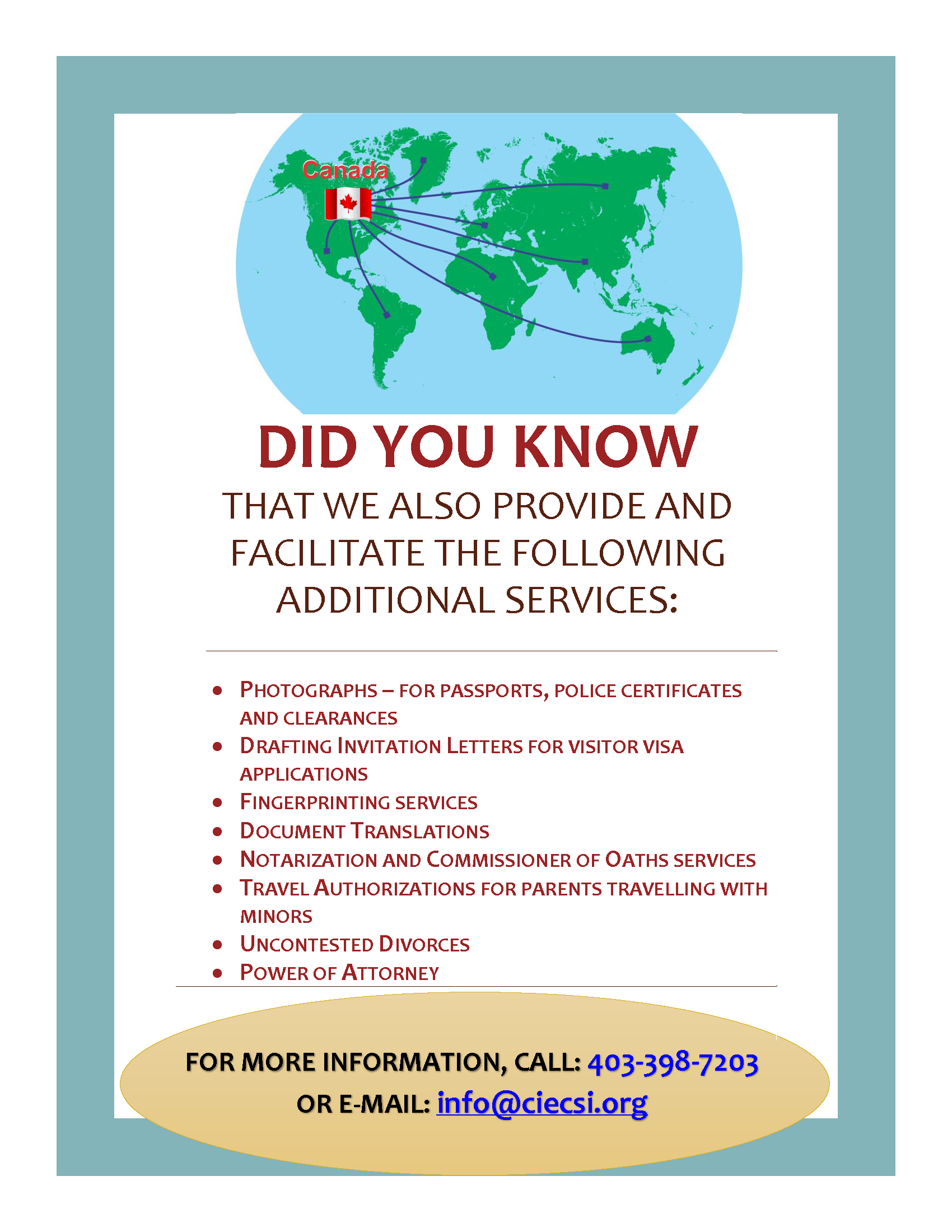
One Stop Immigration & Legal Services

Additional Services Poster

Continue reading
  3310 Hits
  0 Comments
3310 Hits
0 Comments

Removing Conditional permanent residency for spuouses sponsored under the family class category

May 1, 2017 – Canada has abolished the family sponsorship immigration condition that required sponsored spouses and partners to live with their sponsor for two years to keep their Canada immigration status.

Immigration, Refugees and Citizenship Canada says the move is being taken to tackle concerns with many people choosing to remain in abusive relationships because they are afraid of losing their permanent resident status.

The rule change applies to any family sponsorship immigration candidate previously subjected to the previous requirement and all new spouses and partners being sponsored as permanent residents.
Basic Requirements For Family Sponsorship

To be a sponsor:

You must be 18 years of age or older.
You and the sponsored relative must sign a sponsorship agreement that commits you to provide financial support for your relative, if necessary. This agreement also requires the person becoming a permanent resident must make every effort to support her or himself.
You must provide financial support for a spouse, common-law or conjugal partner for three years from the date they become a permanent resident.
You must provide financial support for a dependent child for 10 years, or until the child turns 25, whichever comes first.

Two-year Rule Abolished for Spousal Sponsorship in Canada immigration authorities say 100,000 immigrants have been subject to the rule since it was introduced by the former Conservative government in 2012.

“We’re doing away with a measure that could have made a bad situation worse by possibly making people feel they needed to stay in abusive situations just to keep their status in Canada,” said Immigration Minister Ahmed Hussen.

“Removing conditional permanent residence is another example of the government’s commitment for family reunification to make it easier for immigrants to build successful lives in Canada”.

The previous rule targeted couples who had been together for two years or less and had no children in common.
Canada Family Sponsorship: Who Can Be Sponsored?

Spouse.
Common law partner.
Conjugal partner.
Dependent children.
Parents.
Grandparents – (Additional conditions apply)
Brothers or sisters, nephews or nieces, granddaughters or grandsons who are orphaned, under 18 years of age and not married or in a common-law relationship.
Another relative of any age or relationship, but only under specific conditions.
Accompanying relatives of the above (for example, spouse, partner and dependent children).

The move was meant to deter people from using sham marriages or relationships to immigrate to Canada.

Although spouses and partners who were victims of abuse were on paper exempt from the rule, in reality many felt forced to stay in relationships to keep their status.

This imbalance in status left the sponsored person in a vulnerable position, many stakeholders said.

An IRCC statement said: “Even though there was an exception to the condition for people in such situations, it is possible a victim may not have been aware of it or may have chosen to stay in the abusive relationship for a number of reasons.

“Those could include the fear of coming forward, the perceived challenge of proving the abuse or neglect, fear of needing to continue to live with their alleged abuser, or fear of having their status revoked and being removed from Canada if the exception was not granted.”

Continue reading
  3598 Hits
  0 Comments
3598 Hits
0 Comments

Changes to Regulations Will See Age Increased for Dependent Child


News Release

From Immigration, Refugees and Citizenship Canada

May 3, 2017—Ottawa, ON – The Government of Canada has published regulatory changes to increase the maximum age of a dependent child which will allow more families to stay together. This change showcases the Government’s commitment to family reunification.

The new age limit of “under 22” will come into effect this fall, on October 24, 2017, raising it from the current “under 19” requirement. The increased age will apply to new applications for all immigration programs under Immigration, Refugees and Citizenship Canada, including for refugees. Children who are 22 years of age or older and who rely on their parents due to a physical or mental health condition will continue to be considered dependent children.

A higher age limit will have more positive social and cultural impacts by keeping families together. It will also better address humanitarian and safety concerns by enabling more family members of refugees to qualify as dependants. Increasing the age limit will also help to enhance Canada’s economy by making it a destination of choice for skilled immigrants who want to keep their families together.

Family reunification is a key immigration commitment of the Government of Canada. The Government has made a number of important changes to uphold this commitment. Regulations were recently published to eliminate the conditional permanent residence measure in recognition that most marriages are genuine and to reduce the vulnerability of spouses in the immigration program. Access to the parent and grandparent program was improved with changes to the 2017 application process to make it fairer and more transparent. In 2016, the number of parent and grandparent sponsorship applications accepted each year for intake was doubled to 10 000 applications, and the Government announced processing times for most sponsored spouses and partners would be reduced to 12 months.

Quotes

“Raising the age of dependants lets more families stay together. This will bring economic and social gains to our country as it enhances our attractiveness as a destination of choice for immigrants and refugees.”

– The Honourable Ahmed Hussen, Minister of Immigration, Refugees and Citizenship

Continue reading
  2873 Hits
  0 Comments
2873 Hits
0 Comments

Refusal to process a Labour Market Impact Assessment application

Ministerial instructions

As a result of public policy considerations as determined in Ministerial Instructions, we may refuse to process your Labour Market Impact Assessment application for:

Low-wage positions in accommodation and food services and retail trade sectors

Low-wage positions in Accommodation and Food Services and Retail Trade sectors (except for those with specific Yellowknife postal codes):

  • in an economic region with an unemployment rate of six percent or higher (as defined by the Program-specific Statistics Canada data used by Service Canada for the purposes of the Temporary Foreign Worker Program)
  • in the Accommodation and Food Services sector (North American Industry Classification System (NAICS) code 72) or Retail Trades sector (NAICS codes 44-45)
  • classified under the National Occupational Classification (NOC) codes 6541, 6611, 6622, 6711, 6721, 6731, 6732, 6733, 7611 and 8612
Yellowknife postal codes

Low-wage positions at or above the current cap

Low-wage positions, if you are at or above the current cap on the proportion of low-wage temporary foreign workers for the same positions at the same work location.

High-wage occupations in the province of Alberta

If the position you are looking to fill with a temporary foreign worker is included in the list of occupations, we will not process your application. The Government of Alberta’s Employer Liaison Services helps employers learn about options for hiring Albertans and Canadians first. For more information and assistance, contact Alberta Labour.

List of occupations

Management occupations
NumberNational Occupational Classification CodeTitle
1 0112 Human resources managers
2 0211 Engineering managers
Business, finance, and administration occupations
NumberNational Occupational Classification CodeTitle
3 1225 Purchasing agents and officers
4 1523 Production logistics co-ordinators
Natural and applied sciences and related occupations
NumberNational Occupational Classification CodeTitle
5 2131 Civil engineers
6 2132 Mechanical engineers
7 2133 Electrical and electronic engineers
8 2212 Geological and mineral technologists and technicians
9 2231 Civil engineering technologists and technicians
10 2233 Industrial engineering and manufacturing technologists and technicians
11 2261 Non-destructive testers and inspection technicians
Trades, transport and equipment operators and related occupations
NumberNational Occupational Classification CodeTitle
12 7202 Contractors and supervisors, electrical trades and telecommunications occupations
13 7231 Machinists and machining and tooling inspectors
14 7237 Welders and related machine operators
15 7241 Electricians (except industrial and power system)
16 7242 Industrial electricians
17 7251 Plumbers
18 7271 Carpenters
19 7301 Contractors and supervisors, mechanic trades
20 7302 Contractors and supervisors, heavy equipment operator crews
21 7311 Construction millwrights and industrial mechanics
22 7312 Heavy-duty equipment mechanics
23 7322 Motor vehicle body repairers
24 7511 Transport truck drivers
Occupations in manufacturing and utilities
NumberNational Occupational Classification CodeTitle
25 8222 Contractors and supervisors, oil and gas drilling and services
26 8232 Oil and gas well drillers, servicers, testers and related workers
27 8412 Oil and gas well drilling and related workers and services operators
28 8615 Oil and gas drilling, servicing and related labourers
29 9232 Petroleum, gas and chemical process operators

In-home Caregiver positions

In-home Caregiver positions, where there is a live-in requirement, that:

  • are classified under the NAICS as a Private Household (NAICS 814)
  • are classified under the NOC codes 3012, 3233, 4411 or 4412
  • have been advertised and indicated on the Labour Market Impact Assessment application as being sought to fill positions, where there is a live-in requirement

Exceptions to this refusal to process

High medical needs clients

If you are seeking to hire an in-home caregiver with a mandatory live-in requirement for high medical needs clients (e.g. people with disabilities, seniors, individuals with chronic or terminal illnesses), you must submit either:

Exceptional circumstances

You must submit the completed Rationale For Possible Exemption for Exceptional Circumstances section of the Schedule G – In-home Caregivers (EMP5601). The rationale must include:

  • a clear explanation of why live-in care is required
  • how frequently the situation necessitating live-in care occurs
  • to what degree you can influence this frequency
  • a description of what other options were explored in order to meet the need for care and why they were deemed not viable
  • how you will ensure fair working conditions for the in-home caregiver, despite the live-in requirement

Previous revocation

We may refuse to process your Labour Market Impact Assessment application for any position if you have had an application revoked in the past two years for having provided false, misleading or inaccurate information.

Processing fee

You will not be charged the processing fee, if we had to refuse to process your Labour Market Impact Assessment application or if you are an ineligible employer. In addition, a letter will be sent to you with the reason why your application was not processed.

Continue reading
  3406 Hits
  0 Comments
3406 Hits
0 Comments

Member of ICCRC

Licensed member of the Immigration Consultants of Canada Regulatory Council

iccrc


Highly Rated by the BBB

Accredited by the Better Business Bureau since 2012 with
an A+ rating

blue-seal-200-42-canadaimmigrationandemploymentconsultingservicesinc-68363